

Which Countries Define the Winter Olympics?
You may only watch these sports once every four years, but the medal table follows familiar patterns — from Norway’s cross-country machine to America’s X Games pipeline.


Friday’s opening ceremonies in Italy will mark the beginning of the 2026 Winter Olympics — also known as “that time every four years when you get hooked on curling and figure skating, before forgetting about them entirely until the next Winter Olympics roll around.”
But there are persistent historical patterns to which countries do well at which sports in the Winter Olympics, and those will play a role once again in who leads the medal table in Milano Cortina this time around. So with that in mind, here are the nations that define the Winter Olympics, how they’ve gotten to this point and how they’ll fare in Italy:
Norway: Historical giants
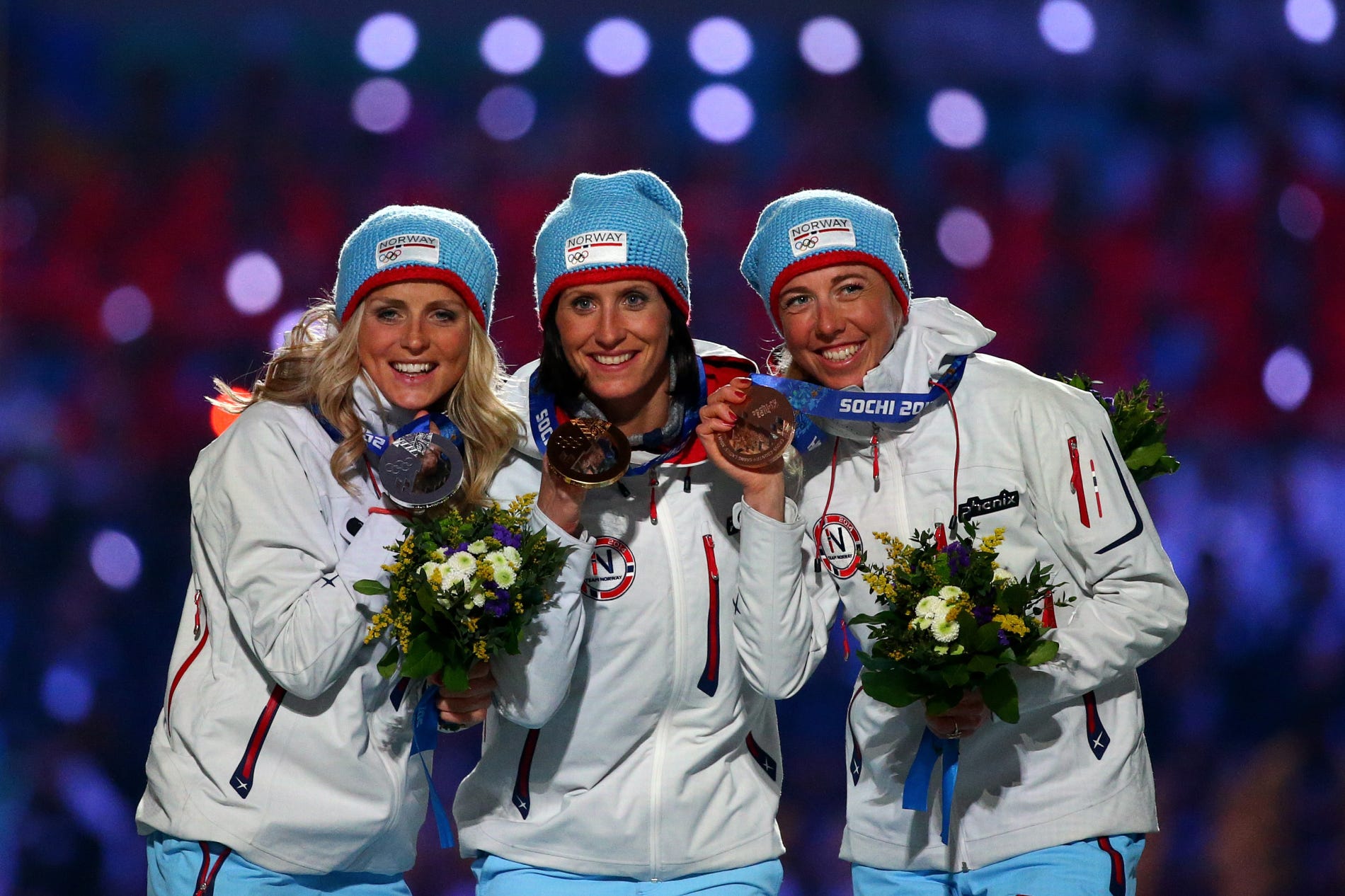
Simply put, Norway is the most successful country at the Winter Olympics. It’s won the most total medals (406) and the most gold medals (148). Three of the top four Winter Olympians in all-time medals are also Norwegian.
Norway makes the math pretty simple: Be really, really good at the sports that offer a lot of medals, like cross-country skiing and speed skating.
The bulk of Norway’s medals have come in just those two sports, especially cross-country skiing. Norway’s 129 medals in cross-country skiing are by far the most, as no one else has even hit 90. Led by seven-time Olympic medalist Johannes Høsflot Klæbo, the Norwegians will certainly add to that total in Italy this year.
Elsewhere, they’ve won the second-most medals in speed skating while also dominating in other sports: For instance, Norway has taken home the most medals in ski jumping, recent scandal notwithstanding. And considering their success in both cross-country skiing and ski jumping, it should be no surprise that they are far and away the most successful country in Nordic combined. Swap out the ski jumping for shooting in biathlon, and, yep, Norway leads in medals there, too.
Lets just say there’s a reason why Norway has won the most gold medals in four of the last six Games.
The Netherlands and South Korea: Kings of speed skating
There are two flavors of speed skating at the Winter Olympics, and each one has its own dynasty.
At the Winter Olympics, the Dutch specialize in long track speed skating. The Netherlands has won 147 medals at the Winter Olympics, and 133 of them are in speed skating. That’s by far the most of any country — nobody else even has 90. In a similar vein, nobody’s touching the Dutch’s 48 gold medals, either.
The Netherlands was good for a handful of medals per Olympics for a long time, but the Dutch have really turned it on in recent Games. After winning seven speed skating medals in 2010, they went into Sochi in 2014 and came away with 23 of the 36 medals awarded in speed skating, including four podium sweeps. They followed that up by winning 16 medals in Pyeongchang in 2018 and 12 in Beijing four years ago.
As for how the Dutch have dominated in speed skating, it’s just different there. For one, they have the most active skaters. The infrastructure is in place to succeed, too. The United States has two speed skating ovals, and Canada has three. Meanwhile, the Netherlands, despite being a much smaller country in both size and population, has eight.
There will still be some stiff competition in Italy, like American prodigy Jordan Stolz — but don’t be surprised to see the Netherlands dominate the podium in speed skating again.
On the short track, it’s a similar story for South Korea. Fifty-three of South Korea’s 79 medals at the Winter Olympics have come in short-track speed skating, though its medal hauls have slowed down a bit since winning 10 in the discipline in 2006.
United States: On X Games mode
You can cut most of the Winter Olympics into two halves: One contains the more “traditional” Winter Olympic sports, like figure skating, ski jumping, speed skating, cross-country skiing, biathlon, etc. The other has the newer, more “extreme” sports — such as freestyle skiing and snowboarding, as the latter became more popular in the 1980s and 1990s. With the rising popularity of the X Games, it just made sense to add them to the Olympic Games, too.
The United States has historically struggled with many of the older sports. Sure, the U.S. has had its heroes in figure skating — where Americans do have the most medals all-time — alpine skiing and speed skating, but it’s struggled to turn out ski jumpers and cross-country skiers (and, by extension, Nordic combined and biathlon athletes).1 That meant the U.S. was usually middle-of-the-road in terms of medals.
Take ski jumping, where Anders Haugen won a bronze medal at the inaugural Winter Olympics in 1924… and the U.S. hasn’t medaled in the sport since. Its only four medals in Nordic combined all came in 2010. Until Jessie Diggins came along in 2018, the U.S. had just one medal in cross-country skiing. And ironically, given its profusion of guns, the U.S. has never medaled in biathlon.
But the United States’ fortunes in the Winter Olympics changed on home soil in 2002. After winning 26 medals at the 1994 and 1998 Games combined, the Americans’ medal count ballooned to 34 in Salt Lake City. Part of that was because they won a slew of medals in speed skating, figure skating and alpine skiing, but you were also starting to see the U.S. move up the medal table because of newer sports, such as when they swept the podium in men’s halfpipe and won three more medals in freestyle skiing.
Ever since then, the U.S. has never finished below fourth in overall medals at any Winter Games. As more and more freestyle skiing and snowboarding events have been added, like slopestyle and big air, its medal count has shot up. The Americans’ 35 total medals in snowboarding alone is by far the most. In second is Canada, whose 17 total medals are equal to the number of American gold medals.
With a U.S. team that’s sending several snowboarders and skiers to the Livigno Snow Park who already have Olympic medals (Chloe Kim, Alex Hall, Nick Goepper, Red Gerard, Alex Ferreira, etc.) along with the likes of six-time X Games medalist Mac Forehand, the Americans will be poised to add to these totals. FiveThirtyEight (RIP) wrote about this phenomenon back in 2018, and it’s still true eight years later.
Even outside of the newer X Games events, the U.S. will still have its opportunities to medal in freestyle skiing. There are two U.S. men in the top five of the overall moguls World Cup standings (Nick Page, Charlie Mickel) as well as three American women in the top four (Tess Johnson, Olivia Giaccio, Elizabeth Lemley). That’s not even counting 2022 silver medalist Jaelin Kauf, who’s the leader in the dual moguls standings ahead of the event’s Olympic debut.
Germany: F1 on ice
English striker Gary Lineker once said, “Football is a simple game; 22 men chase a ball for 90 minutes and at the end, the Germans win.”
When it comes to bobsled and luge, 30 athletes slide down a track multiple times and at the end, the Germans win.
Keeping track of Germany’s historical performance at the Olympics is a little challenging due to geopolitical reasons, but there’s no denying that the country has done incredibly well in the sliding sports. Germany’s most successful event in terms of medals is actually biathlon, but it has truly dominated at hurtling down icy, banked tracks at high speeds.
Germany owns the most medals in luge with 43, and in second place with 29 is… also Germany, East Germany to be exact. In bobsled, Germany again leads the way with 32, plus another 19 between East and West Germany. Skeleton was re-introduced to the Olympics in 2002, and while the Germans only have six medals in the sport, that’s still nothing to sneeze at — only Great Britain and the U.S. have more.
Expect more of the same this month in Italy. Germany took home seven medals in bobsled alone in Beijing, thanks in part to sweeping the two-man event. The Germans also won 10 medals at last year’s International Bobsled and Skeleton Federation world championships, including sweeping the two-men and two-woman bobsled events.
They’ve dominated on the bobsled World Cup circuit this year, too. Three German pilots (Johannes Lochner, Francesco Friedrich and Adam Ammour) are in the top three spots in the two-man and four-man World Cup standings, and the women have had similar performances in two-woman and monobob.2 This season’s World Cup slate started at the Olympic track in Cortina d’Ampezzo, and that stop featured yet another German sweep in the two-man event, plus first- and second-place finishes in the four-man and a pair of wins for Germany’s Laura Nolte in the two-woman and monobob.
It’s a similar story in luge, where the Germans captured 12 of 21 medals at last year’s world championships. The point is, keep an eye on Germany in the sliding events!
Austria: Alpine specialists
If South Korea and the Netherlands specialize in skating, Austria specializes in alpine skiing.
The Austrians are far and away the all-time leaders in alpine skiing medals with 128, a whopping 58 ahead of second-place Switzerland. Their success in alpine skiing also makes up just over half of their all-time medal total. Austria has faced fierce competition from Switzerland in recent Games, and don’t be surprised if that continues in Italy. For instance, the two betting favorites in men’s downhill are both Swiss (Marco Odermatt and Franjo von Allmen), as is also the case in men’s giant slalom. (Don’t worry, the Austrians still have the favorite in women’s giant slalom, Julia Scheib.)
But historically, the Austrians have scored at least seven Alpine medals total in five of the past six Winter Olympics, supporting them in having the sixth-most medals of any country in the history of the Games.
Canada: Hockey (duh!) and a lot more
It wouldn’t be a list of the most prolific nations at the Winter Olympics without talking about Canada, which has one of the most interesting and balanced profiles of any successful country on this list.
To nobody’s shock, Canada’s 23 total medals in ice hockey — 16 for the men and 7 for the women, including 14 golds combined — are the most of any country in history. (The United States, long Canada’s little brother to the south in this rivalry, is second at 18.) Any other placement for the Canadians would be, frankly, unacceptable in their national sport.
But it may come as a surprise that hockey only ranks fifth-highest on Canada’s list of all-time Winter Olympic sports in terms of total medals, accounting for just a hair over 10 percent of their 226 pieces of hardware all-time. A lot of that is because hockey simply has fewer medals to hand out than other disciplines, but it also illustrates how good Canada has been at a well-rounded group of winter sports.
The country’s Top 4 sports for medals are long- and short-track speed skating, freestyle skiing (where it has the most golds of any nation) and figure skating. And in addition to those sports plus hockey, Canada has the second-most medals of anybody in snowboarding and the most total medals (12) and golds (6) in curling, all since it was re-introduced as an Olympic sport in 1998. (And for all the talk of hockey being Canada’s national pastime, I defy anyone to attend the Scotties and not come away thinking it’s curling instead.)
The result is a profile where the bulk of the medals are not coming from any one sport, but rather they’re spread across many different ones — which somehow feels very “Canadian” to us.
Filed under: Olympics
In that regard, they were kind of the opposite of Norway.
Yes, that’s what it’s called.
 | A guest post by
|
Love these two weeks! Curling! go Cory and Korey!
Fun fact: While USA only has two indoor speed skating ovals, the Berry Events Center in Marquette, Michigan has 100 ft wide ice for the NMU hockey team. This is so they can fit a short track oval on it. The Turino 2006 time trials were held there.
Source: I worked in the building as a student custodian; and also got to don the bright yellow SECURITY jacket during public skates. I was on the crew that removed the plexiglass from the dasher boards prior to the trials (we also covered the ice and put the basketball floor down several times through the school year). Sadly, I didn't get to meet Apollo Ohno or any other of the Olympic athletes. I was just there at times during the multi day event as part of the ice crew. They Zamboni'd the ice VERY often.