


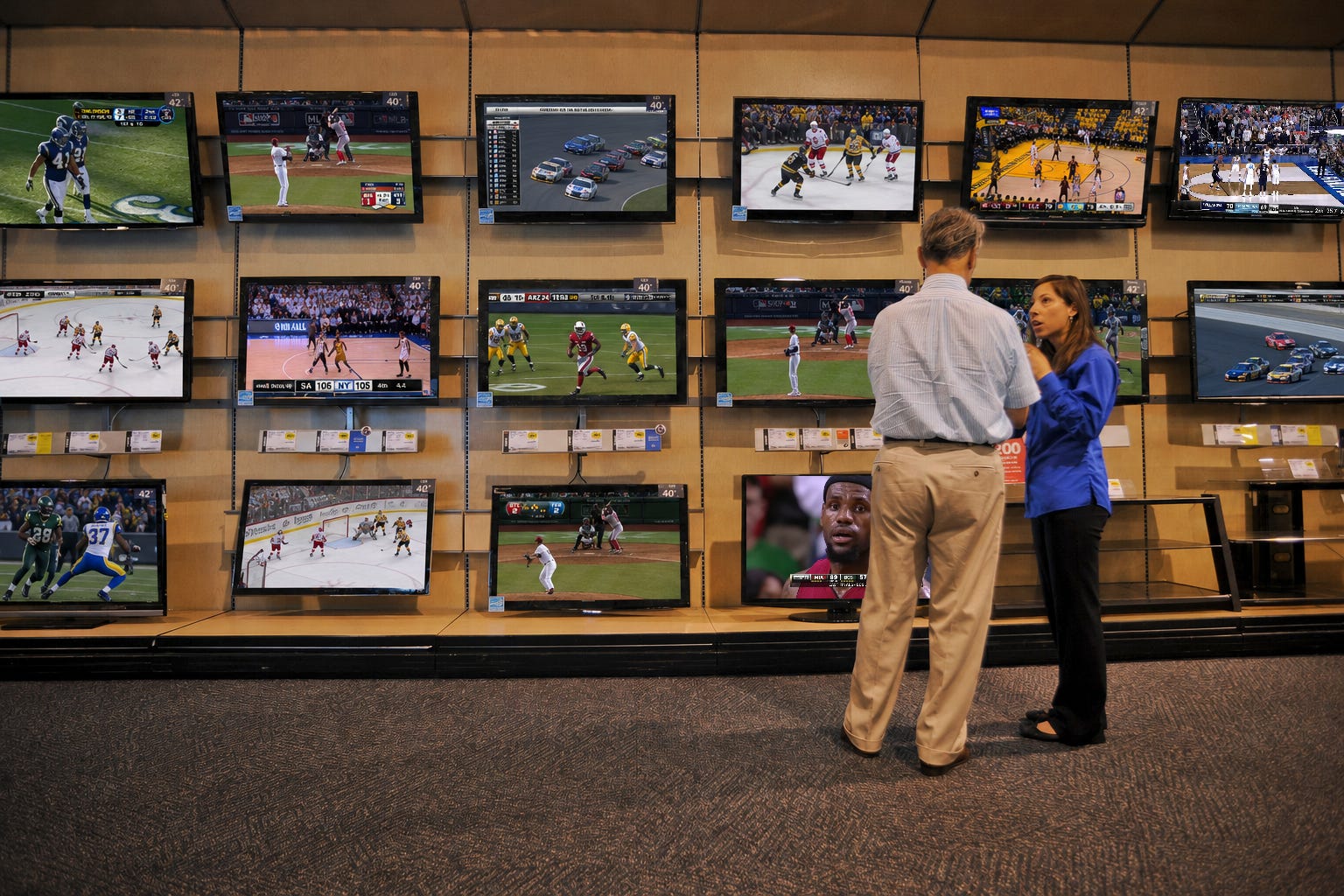
Last week, Ethan Strauss wrote a really interesting column about what he called the “present collapse” of culture.
Riffing on Douglas Rushkoff’s concept of Present Shock, Ethan argues that our society not only lives in a perpetual state of “now,” but that the boundaries between the digital past and present have begun to dissolve into a single, flattened “discourse singularity.” Because social platforms can strip away temporal context and recirculate old content alongside current posts, the public square now continually, confusingly, reacts in real time to recycled history as though it were all happening at once.
Anyone can vouch for this if they’ve ever scrolled through YouTube and had to double-check exactly how old the clip they’re watching is — or even if they’ve spent much time here on Substack, where Notes will often serve you posts spanning a bafflingly wide range of dates, with few obvious indicators of when they were actually written.
But no area may be quite as susceptible to this general phenomenon as sports itself — for the simple reason that, increasingly, the sports past doesn’t even look like it’s from the past anymore.
For most of history, televised sports footage came with its own built-in timestamps: Black-and-white film looks absolutely ancient. Washed-out color broadcasts look many decades old. Grainy videotape still looks distinctly like it’s from the ’80s or mid-’90s. And a game from the late ‘90s or early 2000s usually gives away its age immediately with a boxy 4:3 frame and standard-definition image quality.
Then, in an incredibly short period of time, that all changed.
High-definition television went from a niche, luxury medium to the default way Americans watched TV — and the biggest events in sports were already waiting for them to catch up, after making the same transition even earlier. The first major U.S. pro championship broadcast in HD was Super Bowl XXXIV on January 30, 2000:

Within a few years, MLB joined the NFL in that regard, and by the mid-2000s, the Super Bowl, World Series, NBA Finals and Stanley Cup Final had all permanently crossed over into HD:1
Most sports fans weren’t actually viewing it that way, of course. Just 1 percent of TV-owning households had a high-definition set in the year 2000, and adoption was still just 12 percent by 2005. That meant only a select few got to see Donovan McNabb puke in the Eagles’ huddle in all its HD glory:2

But within a few more years, HD sets were genuinely taking over American living rooms. Here’s a plot of high-definition TV ownership as a share of households with a television, including both standard HD and the later adoption of 4K/Ultra HD standards:
By the mid-2010s and into the 2020s, the vast majority of televisions in use were at least HD, if not even higher-resolution; manufacturers stopped even making standard-def television sets by the late 2000s. High definition broadcasts, once a special showcase for fancy, expensive technology, were now how all events were shown and recorded for posterity.
And once that happened, sports entered a visual era that has proven surprisingly durable ever since.
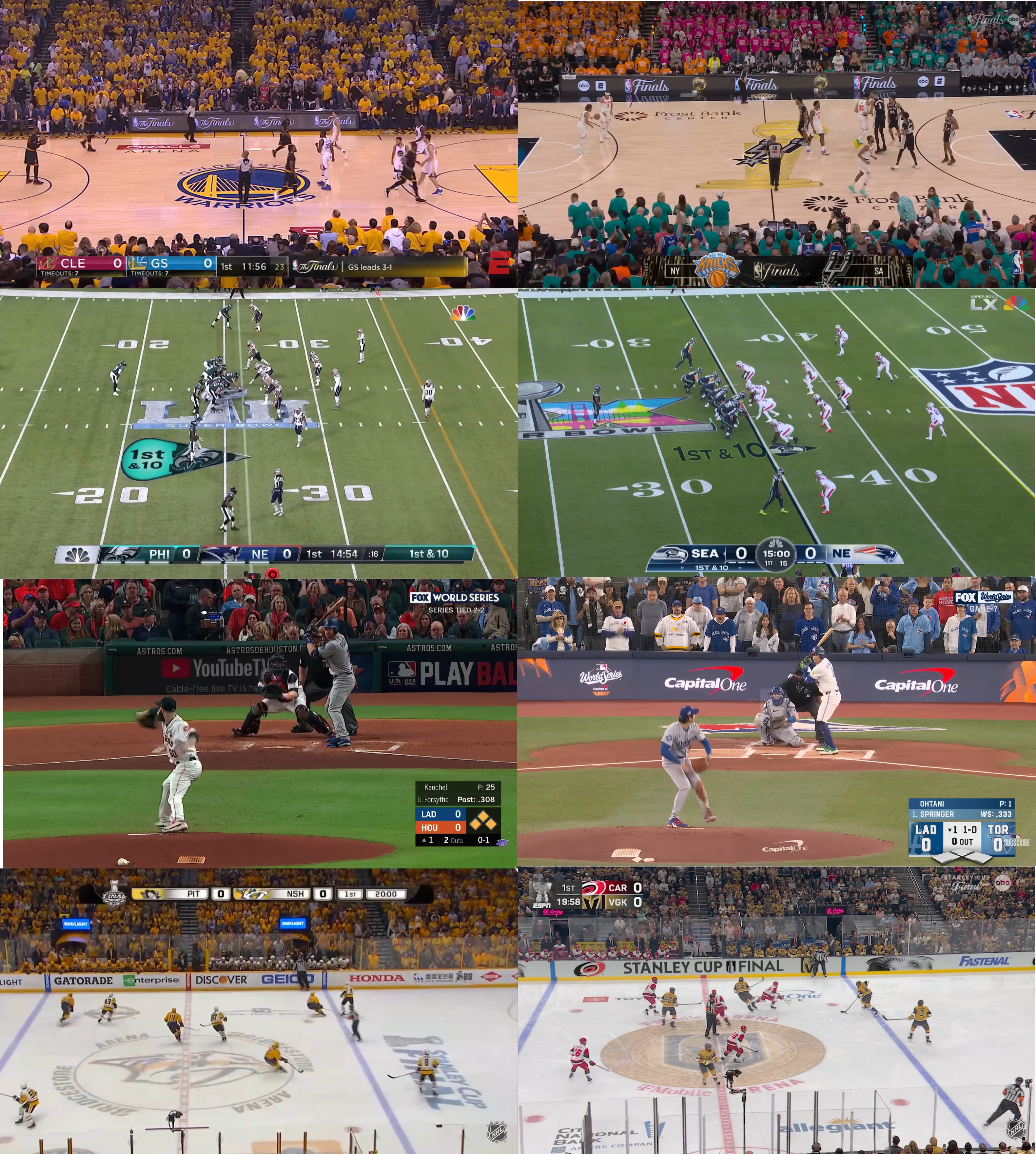
Hold up any two games from the HD era side-by-side, and the quality of the image is no longer the dead-giveaway it used to be for when each game happened. This is especially true in the past decade, once those 4K standards became more and more prevalent. Other aspects of the games themselves — the players involved, the strategies, the helmets and other equipment, etc. — may offer clues as to when a game is from, but the visual quality and the presentation itself (replete with things like yellow first-down lines) has scarcely improved the same way it did over any prior set of games a decade or more apart:
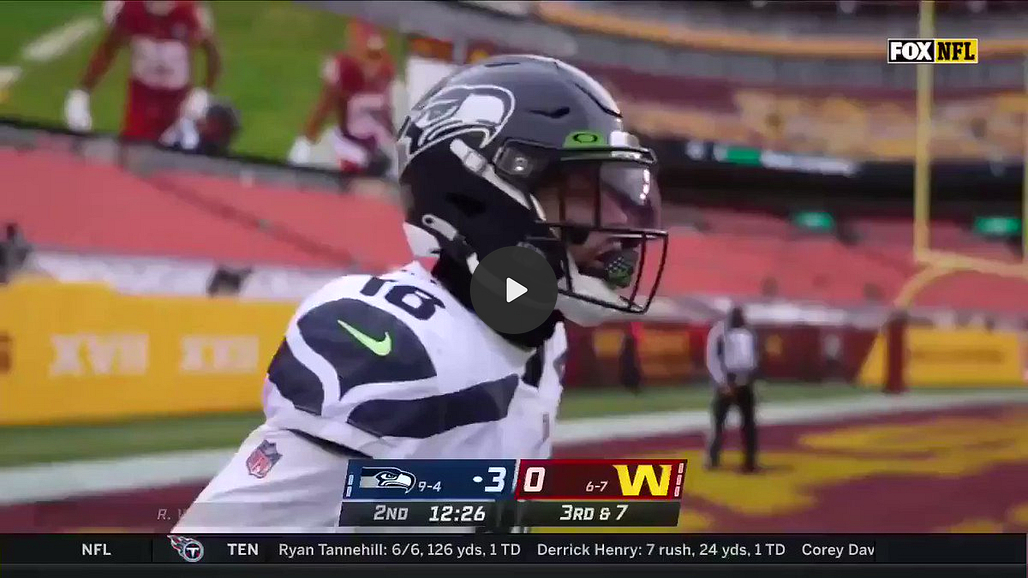
That isn’t to say sports broadcasts have literally stopped improving at all. The graphics packages have more bells and whistles than they did 15 or 20 years ago. Cameras are better now, with HDR preserving more detail in brighter and darker areas. Super-slow-motion replays have gotten impressive, and networks increasingly mix in cinematic-looking shots with shallow depth of field:3

But those refinements still exist within the same basic visual language. They don’t create the kind of obvious chronological breaks that once separated one era of sports from another. A 1986 game bears little resemblance to a 1996 game, and a 1996 game would never be mistaken for a 2006 game, which itself doesn’t fully look like 2016 yet. But a high-end HD broadcast from 2016 can easily pass, at a glance, for something from 2026.
Which brings us back to Strauss’s “present collapse” concept. Just like a podcast clip of Jamal Murray talking about sleeping on an air mattress could be pulled out of its original time and context, repackaged and erroneously reacted to as though it was fresh content, sports footage from the HD generation is becoming largely interchangeable now, particularly in the 4K-heavy era since the 2020s. If the players and uniforms haven’t notably changed, there’s almost nothing to tell you whether a given play happened last night or five years ago — the clip can travel through time with barely any friction at all.
Maybe this is why sports arguments themselves increasingly seem to take place in an eternal present. Tom Brady’s 2007 Patriots, LeBron and the Heatles, Tiger Woods at Torrey Pines, Albert Pujols in St. Louis, Alex Ovechkin at his peak — all of it remains easily available to us, in footage that looks and feels fundamentally like the games happening right now. In a certain sense, they may as well still be playing at the top of their games.
For fans of classic sports, this is a pretty amazing thing. We have vastly better access to archives of the recent past than sports fans have ever had before. And as a veteran of grainy ESPN Classic shows, I mostly don’t miss the days when watching old sports meant squinting at footage with lower resolution than the Zapruder film.
But it may also serve to distort our sense of historical distance between eras. Players whose primes were separated by 15 or 20 years can feel like contemporaries because, visually, they practically are. That they came from different literal generations is obscured now by the fact that they belong to the same technological generation.
In Strauss’ telling, “present collapse” happens when the internet erases our sense for when an old quote or clip happened, unmooring us from its true context. Similarly, high-definition sports footage has taken away maybe the main visual cue that always used to tell us when a broadcast actually happened, collapsing any distinction we once felt between past and present.
Either way, it’s hard to let go of the past when the past always feels like it’s still ongoing.
Filed under: Culture
There are some weird discontinuities in the coverage — for instance, despite the Rams’ previous appearance being in high def, Super Bowl XXXVI was actually not broadcast in true HD format; Fox broadcast the game in a 480p enhanced-definition widescreen format called “Fox Widescreen” instead.
Before you start typing in the comments — it’s a joke, I know the broadcast never actually shows him throwing up, which may or may not have even happened anyway. McNabb is one of my favorites; I kid because I love.
This might be the most obvious way to tell current broadcasts are from a different time than earlier HD ones. But even that change is already roughly 5 years old now.
This is similar to how the fidelity of audio recording steadily improved up until the late 1960's, but after that it crossed the threshold where we don't hear a distinct difference from one generation to the next in the quality of the sound. Video recording just hit that threshold about 30 years later.