


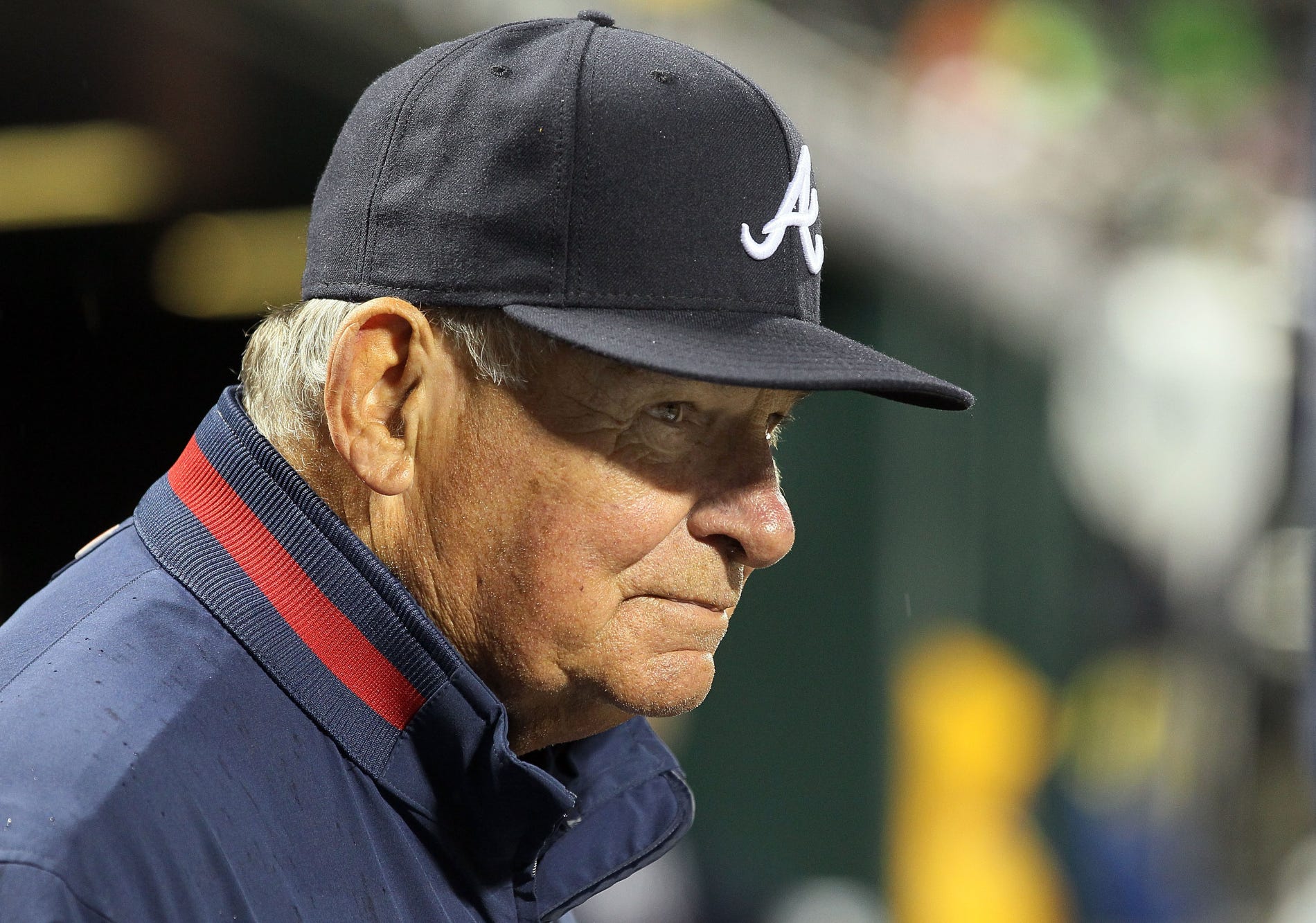
A few weeks ago, I wrote about the National League East reverting to its ‘90s and 2000s-era norm in 2026 — with the Atlanta Braves keeping consistent while the rest of the division’s would-be contenders implode. But on Saturday, the baseball world lost one of the main factors behind the historical part of that trend: longtime Braves manager Bobby Cox, who passed away at the age of 84.
The Cox-era Braves are a subject of ongoing fascination for me because, a) I grew up in Atlanta1 at the height of that run — even if I wasn’t a Braves fan growing up, per se — and b) they sit at the intersection of many recurring debates we still have about coaching, clutchness, luck and the relative merits of the regular season versus the playoffs.
The Braves’ 14-season division-title streak, spanning from 1991 through 2005,2 predated the era of internet sports discourse almost entirely. But if it had played out in today’s environment, Cox would have been at the center of endless social-media and talking-head arguments over Atlanta’s simultaneous over- and under-achievement. That’s because there’s an inherent paradox whenever a coach or manager is consistently able to put his team in a position to contend for championships… yet also consistently falls short in the playoffs.
And nobody typified that phenomenon more than Cox’s Braves.
Based on a logistic regression using preseason and pre-playoff Elo ratings, no team made the playoffs more often than we’d expect based on their projected team strength from 1991-2005 than Cox and the Braves did, making it more than TWICE as often as expected (14 times versus 6.9):
Along the way, Atlanta added 1.01 expected championships worth of title odds over those years during the regular season alone, far more than any other team in baseball over the 1991-2005 span. But then, they turned around and gave back 1.17 championships’ worth of odds in the postseason — meaning they actually still undershot their total expected World Series wins overall (with just the sole championship from 1995) despite giving themselves such an astronomical head start during their regular seasons:
Truly, no other team was like the Braves under Bobby Cox in that regard. Cox’s time at the Braves’ helm begs the eternal question of expectations versus reality: Would you rather have low expectations and mildly exceed them, or perpetually raised expectations each regular season that mostly go unmet every year in the playoffs?
I don’t have a great answer — and I’m not sure there is one, truth be told. The main question might be how such a setup is even possible in the first place. How could a team simultaneously be that lucky during the regular season and that unlucky during the postseason?
Unless one believes general manager John Schuerholz simply assembled a roster full of playoff chokers, the main theories about Atlanta’s underperformance mostly center around the idea that Cox (and his staff, including stellar pitching coach Leo Mazzone) were optimizing to coax above-expected production out of already-good rosters during the regular season. The evidence for this is actually quite strong: as I found in this story, Cox’s teams outperformed their projected talent levels by an average of 3.1 wins per 162 games during his 25 years with the Braves; in some seasons, his impact was as high as 10 wins!
The mechanism by which this happened is up for debate. Cox was famously steady, loyal and player-friendly, a manager whose best skill may have been keeping the personalities of a talented clubhouse all working toward a common goal for six months at a time. He also seemed to manage April through September with a kind of October-level investment, fighting for every marginal call as if the season might turn on it. This may help explain why his teams stayed focused and rarely drifted below their talent level over 162 games — but it may also help explain why there was no extra gear waiting for them once the actual playoffs arrived.
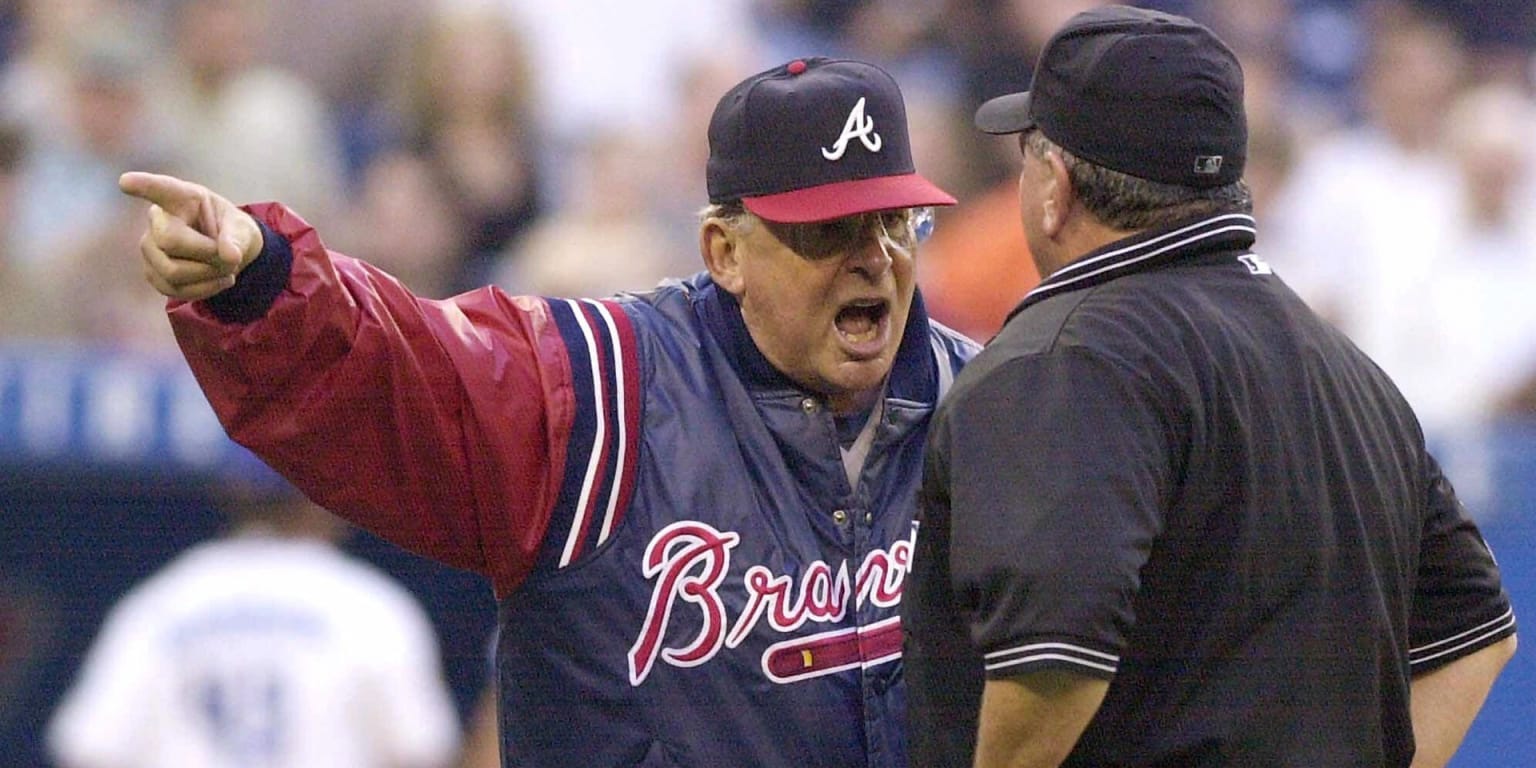
The latter trait manifested itself in one of the most notable parts of Cox’s legacy: his record-breaking ejections. Like Earl Weaver before him, Cox would get himself tossed anytime, any place in any situation; he’s the only manager to get tossed out of a World Series game twice. His career mark of 162 career managerial ejections is not only MLB’s all-time high, but it’s 34 percent higher than No. 2 John McGraw, and more than double that of any other manager in history save for eight other names:
For Cox, the ejections were seldom quite as fiery or theatrical as those of Weaver or Billy Martin, Cox’s mentor as a coach on the 1970s Yankees’ staffs. Instead, they were an outgrowth of his overall approach to managing a baseball team. Cox used ejections as a way to earn players’ loyalty, standing up for them and taking over the argument to protect them from being ejected instead. He also used them as a motivational tool. If the Braves were playing flat or lethargic, Cox would pick a fight with the umpire to wake up his players (or the crowd).
Everything with Cox was tactical — even getting thrown out was part of his strategy to manage a championship-level team over baseball’s infamously long grind of a regular season.
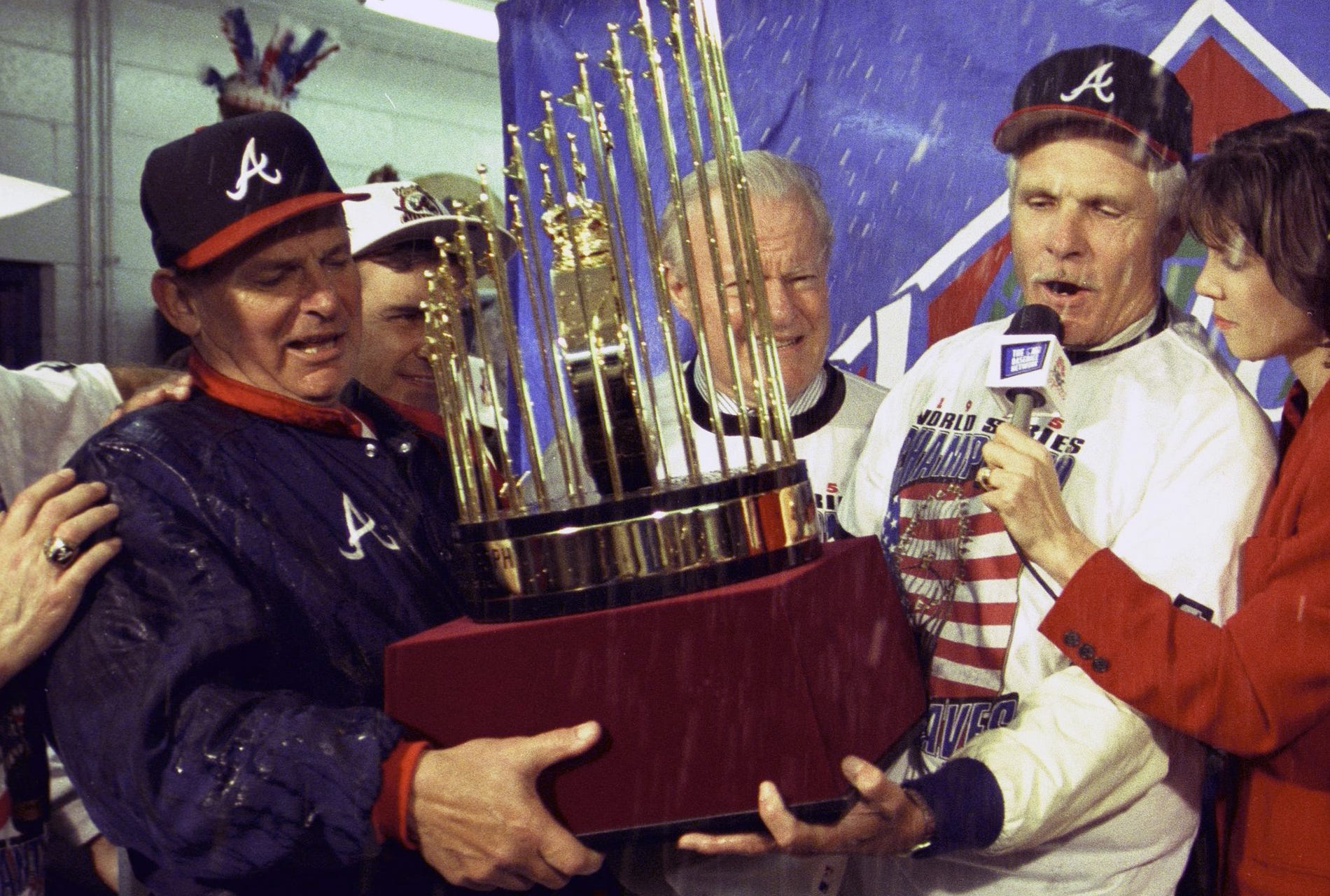
In a strange bit of cosmic coincidence, Cox’s longtime boss, former Braves owner Ted Turner, died three days earlier last week.
Turner was a fascinating character unto himself: a marketing genius and a pivotal figure in baseball history, pioneering TBS as a “Superstation” that carried Atlanta’s games across the country via cable and satellite, in a precursor to the regional sports networks (RSNs) that every team would eventually adopt. In Cox, he found the perfect steward who could convert his high-priced rosters — their average payroll rank from 1992-2006 was 5.4 — into “America’s Team” on the biggest stage any baseball team had known to that point in history.
For good or — many would later argue — for bad, Turner was also among the main architects of our modern attention economy, creating a world where everything is available at all times… whether we want it or not.
Ironically, though, Turner’s vision for sports on TV worked too well. The RSN model ended up eating itself alive when teams had leveraged too much of their financial future on it, and it was weakened by cord-cutting. Now, the loss in revenue by transitioning from RSNs to direct-to-consumer streaming services threatens to cause a lockout this upcoming offseason:
Why is MLB "Likely" Headed For A Lockout?

One of my favorite YouTubers to toss on in the background and keep up with the world of sports media and business is Brodie Brazil, the longtime Bay Area broadcaster and host. But I wasn’t happy to wake up Tuesday and watch Brodie talk about this development looming over the start of baseball season, as pitchers and catchers began reporting to Spring Training:
Likewise, Cox’s model for squeezing value out of the regular season by sweating every detail and fighting for every inch was highly effective in maintaining the Braves’ postseason streak. But as the rise of analytics spurred every team to obsess over edges the same way, the game became more optimized — and less romantic. The whole sport now thinks constantly about leverage, rest, matchups, marginal gains and long-term roster maintenance. In other words, the modern game has absorbed Cox’s intuition that, over 162 games, nothing is too small to matter.
If both approaches eventually became victims of their own successes, that was only because the successes had been so spectacular when the Braves pulled them off. And in that sense, Turner and Cox made for a fitting pair. Turner’s genius was understanding that baseball was invaluable as programming — a way to turn a team into a brand through sheer repetition and ubiquity. Cox’s genius in the dugout was similar: He understood that a baseball season is won only by carefully managing focus, emotion and urgency across 162 games.
Turner turned the Braves into something people could watch every night. Cox turned them into something worth watching every night. And that ultimately made their era transcend the championships they didn’t win, in favor of the standard they set and the excellence they sustained.
Filed under: Baseball
Specifically, Decatur, GA — I grew up playing baseball at Medlock Park in North Druid Hills.
Once again, I’m compelled to note that the 1994 strike season does not count — otherwise, the Expos likely would have stopped the streak before it hardly began.
Really enjoyed this article.
The superstation model is more a near polar-opposite of the RSN model, precisely because it's not regional and the superstations (WTBS, WGN, WWOR, WSBK, etc.) weren't really sports networks either. It was a response to the Braves (and Cubs, to a lesser extent: in Massachusetts in the 90s, TBS and WWOR were the superstations with WSBK being local... it wasn't until I got DirecTV that I got WGN) making their games national that led to the teams only having regional rights (and Turner South then took more Braves games and only made them regionally available).